

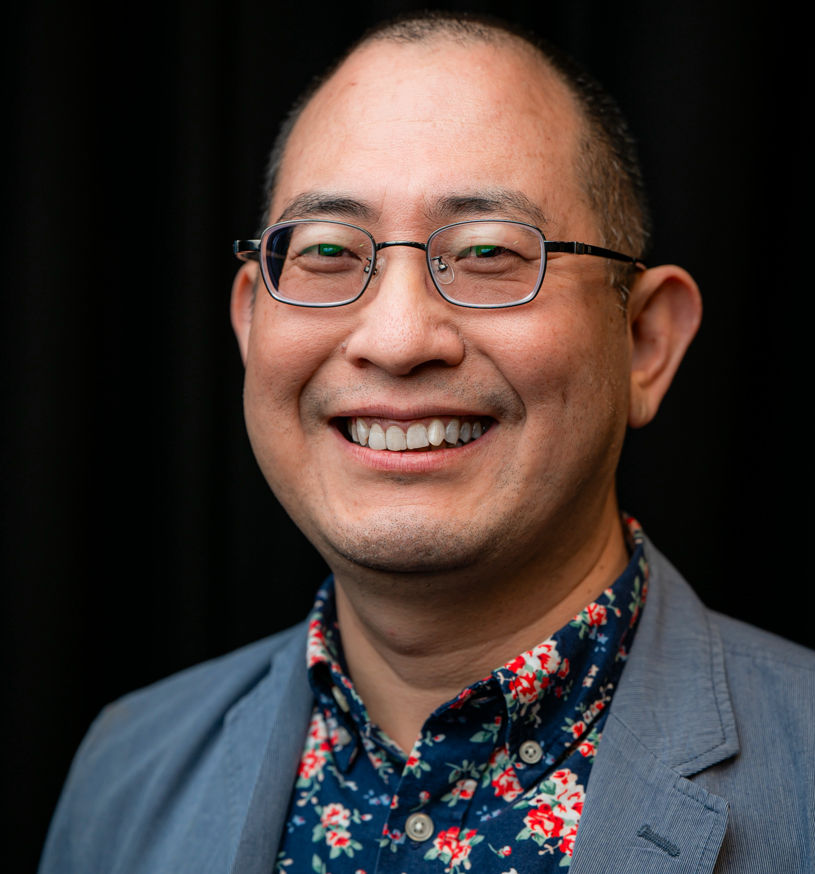
Micha Mirto and Jordan Clarke (Raising Gays)

Set in a small Somerset town preparing for its first Pride parade, Raising Gays shifts the spotlight away from coming-out narratives and onto the parents navigating their children's identities with varying degrees of understanding, uncertainty and love. Blending humour, heart and a contemporary musical score, Raising Gays explores allyship, family and intergenerational connection through characters rarely centred on stage. We spoke to Micha Mirto and Jordan Clarke about the inspiration behind the show, the importance of telling parents' stories, and their hopes for the musical's future.
Q) Hello Micha and Jordan, thank you for taking the time to answer some questions. Before we begin, please could you tell us a little bit more about Raising Gays?
M: Raising Gays is a brand new musical following a support group for parents of queer people. It's about the parents messing it up - but trying anyway. Parents who are hell bent on loving their children, albeit imperfectly.
J: It's JUST about the parents; their side of the story, what they go through when their kids come out, leave home, change their pronouns etc. There are no kids in the show - we are celebrating the parents perspectives because we believe that is an important story that we don't tell often enough.
Q) Raising Gays explores modern parenthood and allyship through comedy and music. What first inspired the idea for the show?
M: I'm gonna hand this one to Jord - as his Mum inspired it! I suppose all of our parents did - but Jord's Mum definitely kicked everything off.
J: For me, I was in Edinburgh with my mum, at the Fringe Festival, and she was talking about not feeling seen by the musicals we'd watched. They were all wonderful, important shows, but all focussed on younger characters. Then, over a cuppa tea and some cake, my mum started to tell me about an old friend of mine who'd just come out in her late 20's. Now, when I came out, mum was supportive over time but definitely found things hard. Here she was, years later, asking me how she could support the parents of my friend who'd just come out. I started to cry, thinking how special it was seeing my mum recognise others going through what she'd gone through, and that was when the musical landed, clear as day. I took it to Micha, and off we ran.
Q) Can you tell us a little bit more about why you wanted to centre the story on the parents of queer children, rather than the children themselves?
M: Because this is the story that hasn't been told yet. It's actually bonkers to me that it hasn't been done yet - it's aching to be told - because we already know the coming out story is important, but we've seen it. We've never seen that story from the other side, plus visibility is incredibly important as is empathy for parents who take a minute to get there.
J: It was the missing part of the story for us. Queer stories have come on so far, and that's a beautiful and important thing to see, but we also don't see much of the stories around those queer characters. Stories seemed to often polarise the perfect queer ally with a homophobic villain, and we know from our own parents that it's far more nuanced than that. We both have parents that have gone on huge journeys. My Dad was someone who was a Sunday school teacher, and grew up in the 60's/70's, and when I came out to him he found it incredibly difficult. He made things very tough for me, and there were threats of being kicked out of the house and all sorts, but over time he worked on himself and opened up to the conversation. Just before he died, he was able to really ask me about my boyfriend, and be a full part of my life. Seeing him go on that journey was incredibly inspiring, and not a story I've seen on stage before. So, it felt vital to do whatever we can to shine a light on that story; the story of an older generation, doing their best to learn and change, and love to the best of their ability.
Q) Why do you think stories about allyship and parenthood are particularly relevant right now?
M: Because right now, when division reigns, we need, more than ever, to remember the art of the conversation. You don't have to understand someone to love them - but you do need to try - and right now, the world needs the exact specific shade of hope that Raising Gays offers.
J: It's a strange time to be alive, there's no question about that. I think at a time when authenticity and nuance are being attacked, and echo chambers are being utilised and reinforced, we need as many stories as possible about real, flawed human conversations. We have to remember that some of the most powerful things we have right now are our differences, and our ability to love unconditionally. I hope this show provides some relief from the outside world, and if it causes people to think about anything, it's that we can achieve anything together if we listen without judgement.
Q) What role do you think theatre can play in conversations around allyship and intergenerational understanding?
M: Theatre is a unique playground for intergenerational understanding - it's a place where discourse through any kind of complex nuanced conversation can happen because we make people hear the humanity in others. It sounds cleverer than it is, but all I really mean is theatre plays the role it does - because it provokes conversation and conversation that is absolutely necessary for any kind of forward movement for society.
J: I think theatre is ultimately the most powerful tool we have. Storytelling is everything, everywhere (all at once) and is the best way to empathise with others, especially those we might not fully understand. Our hope is that using theatre to tell this story, we invite audiences into a safe space, where everyone's mistakes and misgivings are as welcome as their ability to love unconditionally. There are no kids in the show, meaning there is space in the show for us to all put ourselves and our own stories. These characters are people that we all know, in one way or another, and our hope is that this show helps people feel seen and heard in a way that might not have before. The theatre is the church of listening, and that's the perfect way to explore what happens when people whose opinions don't always line up with ours feel truly, deeply listened to.
Q) Why did you choose a small Somerset town preparing for its first Pride parade to be the show’s setting?
M: Somerset is home for me, it's where I grew up and the place I feel safest. I also think that it's rare to see a show set in the west country that isn't patronising - because of course Somerset is different from the cities in this country, but it's also not the parochial backwater space that so many musicals suggest it is. Progress is happening there like it's happening everywhere - in fits and starts, with people messing up but trying again regardless.
J: We both grew up in small, southern towns, and it's incredibly recognisable for us. We share so many memories of village fetes, church halls and social street lunches. We wanted to tell a story about the people we know; folks who don't have the big-city energy surrounding them, who often lead quieter and calmer lives, but who are expected to move on as quickly as those in the biggest cities in the UK. It was important to us that we looked at characters who have questions but don't always feel like they can ask them, and who want to learn and change, but might not always know how, and a small Somerset town felt like the perfect place to tell that story.
Q) How would you describe the musical style and sound of the score?
M: Bangin' - I'm joking! But not really. These songs are total bops and I think Jordan is an extraordinary composer. It's modern(esque) classic MT music.
J: It's quite a mix! There's corners of the score which are really energetic and driven, taking their melodies from the lovely conversational lilts of Somerset accents, and there are some really fun, ironic moments that have people howling with laughter. There's some very gentle, vulnerable moments which have always seemed to move people very deeply, and really I'm trying to create a score that reflects the huge breadth of emotions these parents are feeling. I fundamentally believe that older voices in musical theatre deserve some banging pop/rock songs with huge, encompassing feelings sewn through the notes and the lyrics, and I want this show to make the most of that. These characters span from late 30's to early 70's, and it's important to us that we use super upbeat contemporary music to express their stories. I hope it's full of bops that people fall in love with, and gives these characters the vehicle they need to express their complex situations.
Q) What does presenting a new queer musical in the West End during Pride weekend mean to you?
M: It means the whole world. I'm still having to pinch myself. This is dreams come true stuff - and quite apart from the (incredible) venue, I just can't wait to show the work to an actual, impartial and paying audience.
J: It's a real privilege, and a life-long dream come true. To be sharing this story, on that stage, over the most joyfully queer weekend in London's calendar means everything to us. It's a very different show to anything on in the West End right now, and to be able to share it in that arena at such an early stage feels like a total blessing!
Q) What does the concert reading format allow you to discover about the show at this stage of development?
M: A huge amount, it will tell us which laughs are landing, it will tell us if it holds together structurally, it will make any plot holes or structural issues incredibly evident - so they can then be fixed but it will also allow us to ask our audience - if you have no context for this. What would you change?
J: It means we'll be able to really hear how the audience reacts to every moment, without any extra layers or distractions. We can't wait to grow the show more, and find its physical language, its set, its band etc, but to be able to share the bare bones of what we're working on means that we can test every line, every lyric, and really let the audience respond to the very heart of what we're trying to achieve. It's a joy to share the show this early with our audience, and to let them into these stories, characters and songs at this stage. It's terrifying how exposing it will be, but we couldn't ask for a better strength-test for our ideas!
Q) What has surprised you most during the development process so far?
M: The constant emphatic supportive and empathetic response from audiences. Audiences of cabaret nights, scratch nights, closed reading love this piece. They will come and tell you about their experience after each show - and each person has an incredible story to tell, it's truly wonderful to witness.
J: So many things, but I'd say ultimately the universal response to the show. I can't tell you how many times I've cried on someone's shoulder because they've come up to me after a concert to share their own stories or to share their feelings. There's something about telling the stories we don't often here, and shining a light on people who are trying their best no matter how hard they find it, which just resonates so far and wide in a way we could never have predicted. I think this is the sort of story we might all be in need of at the moment - something that says "it's okay, as long as we're trying our best to lead with love". Seeing people respond with warmth, care, and love has meant everything to us and seeing just how many people of different ages, experiences and backgrounds have resonated with the show has been the biggest surprise.
Q) What are your hopes for the next stage of the show’s journey after this West End presentation?
M: We've got high hopes and reasonable expectation. But we are hoping that this musical lives for many years. I would love more people to see this.
J: We're absolutely aiming to get the show into the West End one day! But next, we just want to get the show on stage so we can share it with as many audiences across the country as possible. We've been so, so moved by the people who have shared with us how much the show means to them, and it's our hope that we can keep sharing it with anyone who might find the show helpful, healing, and consoling, whether that's queer kids or parents dealing with any manner of difficulty. We're already honored to be telling this story and can't wait to tell it more.
Q) How do you hope audiences respond to the show?
M: I hope they feel seen and understood. I hope they have family members who can relate to the piece and I hope it makes them laugh.
J: We hope they sing the bops on their way home, obvs. But more importantly, we hope they resonate with these characters, and recognise themselves in them or recognise people they know. We hope people feel deeply entertained and moved, and maybe even feel like they understand someone a little better, that they didn't think they could understand before.
Q) Why should audiences come along?
M: There is an opportunity here; to be at the very start of an incredibly exciting process. We'd love for you to join us! It's also going to be loads of fun!
J: We promise a serious ride of hilarious, heart-warming moments, and songs that will have you dancing your way through Pride weekend or weeping into your pride flags. It's a brand new show with a perspective that musical theatre hasn't seen before, with a stunning cast and a vital message about empathy. You should come because it's going to be an insanely awesome queer celebration of love that is only happening for one Sunday afternoon!
Raising Guys plays a one night concert reading on Sunday 05th July at the Garrick Theatre - tickets and more information can be found here.


Comments